


If you are looking for stable and meaningful work with regular income, child care jobs are widely available across India in homes, daycare centers, and residential societies. Families living in apartments and gated residential areas regularly hire nannies and childcare helpers to support infants and young children during working hours. These roles suit candidates with a caring attitude, basic education, and flexibility in working hours.
This article explains child care job roles, eligibility, salary, how to apply and real hiring practices.
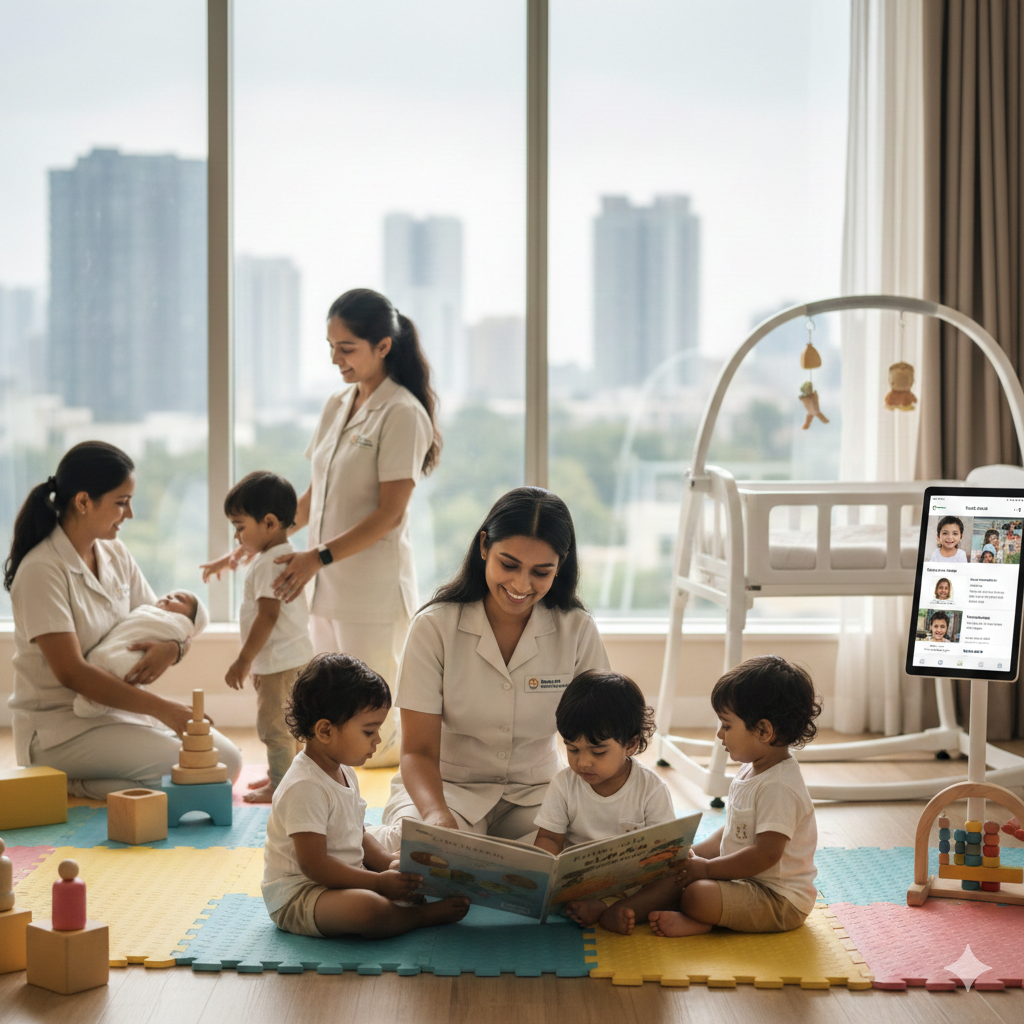
Table of Contents
ToggleThe Child Care Jobs Outlook in India (2026)
The Indian childcare services market is projected to grow at a CAGR of approximately 9.5%, reaching nearly $25.9 billion by 2030. This growth is fueled by:
Urbanization: Migration to metro cities (Delhi, Mumbai, Bengaluru) where traditional joint-family support is absent.
Corporate Mandates: Increased implementation of the Maternity Benefit Act, requiring workplaces with 50+ employees to provide creche facilities.
Professionalization: A shift from “informal help” to “certified caregivers” as parents seek developmental milestones, not just supervision.
Key Job Roles and Responsibilities Child Care Jobs
Gemini said,
In 2026, the childcare landscape in India is undergoing a massive transformation. Driven by the rise of dual-income nuclear families and a growing awareness of Early Childhood Care and Education (ECCE), the demand for professional caregivers—nannies, daycare helpers, and home-based support—has reached an all-time high.
This guide provides a comprehensive look at the Child Care Jobs in India for 2026, covering roles, salary expectations, required qualifications, and the strategic shifts making this a lucrative career path.
1. The Childcare Market Outlook in India (2026)
The Indian childcare services market is projected to grow at a CAGR of approximately 9.5%, reaching nearly $25.9 billion by 2030. This growth is fueled by:
Urbanization: Migration to metro cities (Delhi, Mumbai, Bengaluru) where traditional joint-family support is absent.
Corporate Mandates: Increased implementation of the Maternity Benefit Act, requiring workplaces with 50+ employees to provide creche facilities.
Professionalization: A shift from “informal help” to “certified caregivers” as parents seek developmental milestones, not just supervision.
2. Key Job Roles and Responsibilities
In 2026, the sector is categorized into three primary service delivery models:
A. Professional Nannies (Private Household)
A nanny is no longer just a babysitter; they are viewed as a child’s developmental partner.
Responsibilities: Managing nutrition, age-appropriate educational play, hygiene, and safe transportation to extracurriculars.
Trend: “Live-in” nannies remain popular for HNI (High Net-worth Individual) families, while “Live-out” roles are standard for middle-class urban households.
B. Daycare Helpers and Creche Workers
These roles are based in organized centers or corporate onsite facilities.
Responsibilities: Assisting lead teachers, managing group feeding/nap schedules, and maintaining safety protocols (CCTV monitoring and hygiene logs).
Key Players: Organized brands like Klay, Footprints, and EuroKids are the leading recruiters.
C. Home-Based Support and “Au-Pairs”
This segment is the fastest-growing in 2026.
Responsibilities: Providing flexible, hourly support or specialized care (e.g., newborn care or “Japa” maid services combined with modern childcare).
Types of Child Care Jobs
Home Nanny
Taking care of infants or toddlers at home, feeding support and supervision.
Daycare Helper
Assisting teachers in daycare centres, managing playtime and basic hygiene.
Live-In Child Care Helper
Staying with the family and providing full-day child support.
Part-Time Child Care Assistant
Supporting families for fixed hours during the day.
Night Child Care Attendant
Looking after infants during night hours when required.
Salary Trends in 2026 Child Care Jobs
Compensation varies significantly based on the city and the caregiver’s level of certification.
| Role | Entry-Level (Monthly) | Experienced (5+ Years) | High-End/Metro Rate |
| Nanny | ₹15,000 – ₹22,000 | ₹25,000 – ₹45,000 | ₹50,000+ (Live-in) |
| Daycare Helper | ₹12,000 – ₹18,000 | ₹20,000 – ₹30,000 | ₹35,000 (Tier 1) |
| Newborn Specialist | ₹25,000 – ₹35,000 | ₹40,000 – ₹60,000 | ₹80,000 (Short-term) |
Note: Cities like Mumbai, Gurgaon, and Bengaluru offer the highest premiums, often 20-30% above the national average.
Qualifications and Essential Skills Child Care Jobs
The 2026 job market favors candidates with formal training. While a high school diploma (10+2) is the minimum entry point, ” should highlight:
Formal Certifications
ECCE Diploma: A 6–12 month course in Early Childhood Care and Education (offered by IGNOU and private institutes).
Skill India (NCVET): Government-recognized certifications for Creche Workers.
First Aid & CPR: Now a non-negotiable requirement for high-paying roles.
Soft Skills & Technical Literacy
Communication: Fluency in English or the local language to interact with parents.
Tech-Savviness: Ability to use parent-communication apps (daily logs, photo updates) and operate smart nursery devices.
Patience & Stamina: Physical energy to manage toddlers and the emotional intelligence to handle behavioral milestones.
How to Find Child Care Jobs in 2026
The recruitment process has shifted from word-of-mouth to digital platforms and specialized agencies.
Top Platforms for Job Seekers:
Specialized Agencies: Firms like BookMyNanny or Care24 vet candidates and match them with families.
Job Portals: Indeed India and Naukri.com have dedicated sections for “Pre-school” and “Domestic Support.”
LinkedIn: Increasingly used for high-end “Governess” or “Childcare Manager” roles in corporate settings.
Foundit (formerly Monster): Great for finding roles in organized daycare chains.
Challenges and the Future of the Industry
Despite the boom, the industry faces challenges that candidates should be aware of:
Regulatory Tightening: The government is introducing stricter background check mandates and safety audits for private home-care providers.
AI Integration: Some daycare centers now use AI to track child development patterns, meaning caregivers must be comfortable with data entry and monitoring software.
Work-Life Balance: Nanny roles, especially live-in positions, can have irregular hours, though 2026 has seen a trend toward “contract-based” 8-hour shifts.
Strategic Advice for Job Seekers
To stand out in the 2026 market:
Get Certified: A simple 3-month certification can increase your starting salary by 40%.
Focus on a Niche: Specialize in “Montessori-based play” or “Special Needs support” to command higher fees.
Build a Portfolio: Maintain a record of previous work, reference letters, and a clean background verification (PVC) from the local police station.
How to Apply for Child Care Jobs
Apply Through Families
Most child care helpers are hired directly by families living in residential societies.
Apply Through Daycare Centres
Playschools and daycare centres hire helpers through walk-in interviews.
Apply Through Caregiver Agencies
Registered agencies place child care helpers with verified families.
Apply Through Job Portals
Limited vacancies appear on platforms like Indeed, Apna App and Quikr Jobs.
Career Growth in Child Care Jobs
With experience and trust, helpers can grow into:
Child Care Helper to Senior Nanny
Senior Nanny to Child Care Supervisor
Supervisor to Daycare Manager
Skill development increases long-term earning potential.
FAQs
Are child care jobs safe
Yes, most roles are inside homes or daycare centres.
Is experience required
No, freshers can apply for helper roles.
Is live-in compulsory
No, part-time and full-time roles are available.
Is night duty mandatory
Only for specific night care roles.
Is training provided
Basic guidance is provided by the employer.
Conclusion
Child Care Jobs India 2026 offer stable employment with regular income and meaningful responsibility. With simple eligibility and continuous demand in residential areas and daycare centres, these roles are suitable for candidates seeking household or childcare-based work. Applying through verified families or registered centres ensures safe and genuine employment.